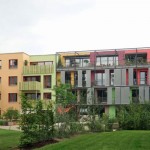
 Group Projects – Council Initiated
A local authority identifies demand for group projects using its Register. It then identifies land for this purpose and markets the opportunity. It may also help groups to form, become constituted and appoint advisers to develop proposals. The local authority develops a method for assessing the proposals against key criteria and awards sites to the most robust groups.
Phases
Initiation
- Check demand
- Identify suitable land
- Write planning brief
- Fix the price
- Market the opportunity
Planning, design & finance
- Select a robust group
- Ask them to develop proposals
- Assess the planning application
Ground works
- Monitor the works
Home build
- Monitor the works
People
Briefing Notes
Demand
Be sure you know level and type of demand - analyse those on your Register.Land
Identify land that is suited to local groups, and allocate it for their use.Brief
Draw up a clear Brief for each parcel of land, so groups know what they can (and can’t) build.Price
Councils should agree a fixed price for land – usually market value.Marketing
Promote each opportunity and give Groups 6-12 months to prepare proposals.Selection
Be clear about the process. Many councils form a selection panel or set out clear criteria.Support
Groups often need advice on how to best organise themselves, and on how to get finance.Permissions
Groups typically need 6-12 months to get detailed planning and building regulation approvals.Monitoring
The Group is responsible for the building work, though you may still have to provide advice.Monitoring
The partner is responsible for the building work, but you may need to monitor progress.Monitoring
The partner is responsible for the building work, but you may need to monitor progress.Pros/Cons
PROS
- By setting the Brief, you can ensure you get what you want
- It is a good way of delivering a mix of homes, including affordable, market housing, shared equity and other innovative tenures/solutions
- It creates an ‘instant’ community as the people involved often get to know each other as the homes are built
- On large sites this approach works well alongside spec built housing, and it can collectively result in more homes being built quicker
- You generate a fair return from any land sales, and you can charge Groups a modest fee to recover your operational costs
CONS
- It can take a little longer in the early development stages – Groups need to initially form up/come together, prepare their proposals, and get their planning permissions in place. But overall it takes about the same time as a more traditional residential development
- You need to be confident the Brief you draw up is viable and workable. Groups will not submit bids on land where they cannot make the sums work, or cannot secure finance
- The selection process needs to be transparent and robust
Notes
ADAPTING THIS APPROACH
This process is based on 20 years experience that has been developed in Germany and the Netherlands. They have trialed many approaches and this model is now the one that has been widely adopted. It is a simple, step by step process that works.FURTHER INFORMATION
This Toolkit contains numerous examples – from France, Germany, The Netherlands, Belgium, Austria and Switzerland.
You may also be interested in how councils can support others in delivering group projects – see Model Group Projects - Working with Others.
Case Studies
The model above is generic. In reality every project is different and you may find these Case Studies useful reference points.